UNVEILING BRILLIANCE

Exploring the EEE Department

OVERVIEW

It’s great to hear about the Department of Electrical and Electronics Engineering (EEE) at Sri Venkateswara College of Engineering.
The Department of EEE was established in the year 2007 with an intake of 60 and enhanced to 180 in 2013 and further to 240 in 2022 reflects the growing demand for quality education in Electrical and Electronics Engineering. The Department has highly qualified and rich experienced faculty with the aim of providing quality educational service.
The Department has good infrastructural facilities and is equipped with full-fledged laboratories and audio visual systems.
The department focuses its research on Renewable Energy Sources, Hybrid Electric Vehicles, Power Electronic Converters, Battery management Systems, and Smart Grids, etc., The department established COE of Lab VIEW Academy from National Instruments.

HEAD OF DEPARTMENT

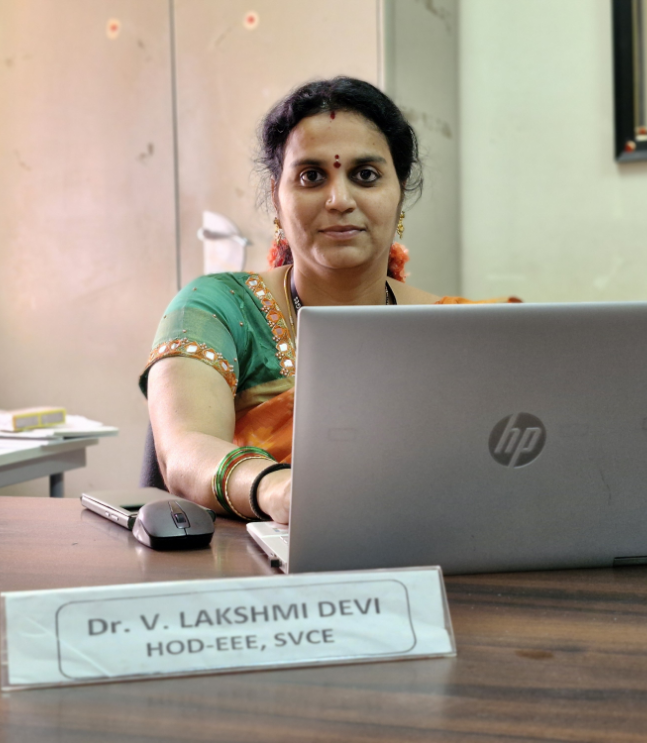
On behalf of our students and faculty, it is my privilege to welcome all of you to the Department of Electrical and Electronics Engineering at S V College of Engineering. We take pride in our faculty, a team of highly capable and dedicated professionals, most of whom have academic and industrial experience and degrees from leading universities of the India. We provide ample opportunities to our faculty and students, through in -house trainings, workshops and trainings outside the college campus for further growth and development in their areas of expertise. This field of engineering and technology has major contribution to the society which we are enjoying and witnessing today. This importance makes Electrical and Electronics Engineering branch to stay ever green on top of all other Engineering branches as well. Thanks and Regards

Dr. V. LAKSHMI DEVI

M.Tech., Ph.D.

Vision

Mission

1 - Solve challenging technological issues in the field of Electrical and Electronics Engineering for the betterment of the living standards of the society as valuable and productive engineers.
2 - Improve the efficiency and effectiveness of the existing methodologies by adapting out-of-the-box rationalised thinking.
3 - Function ethically and communicate professionally as a team member within multidisciplinary teams.
4 - Continue the process of lifelong learning to cater the dynamically changing requirements in the field of Electrical and Electronics Engineering.
1 - Design and develop innovative projects using the domain knowledge of control systems, power electronics, electrical machines, microprocessors and microcontrollers.
2 - Learn the constantly varying technological developments in their problem solving process.

PROGRAM OUTCOMES

ENGINEERING KNOWLEDGE

Apply the knowledge of mathematics, science, engineering fundamentals, and an engineering specialization to the solution of complex engineering problems.

PROBLEM ANALYSIS

Identify, formulate, review research literature, and analyze complex engineering problems reaching substantiated conclusions using first principles of mathematics, natural sciences, and engineering sciences.

DESIGN/DEVELOPMENT OF SOLUTIONS

Design solutions for complex engineering problems and design system components or processes that meet the specified needs with appropriate consideration for the public health and safety, and the cultural, societal, and environmental considerations.

CONDUCT INVESTIGATIONS OF COMPLEX PROBLEMS

Use research-based knowledge and research methods including design of experiments, analysis and interpretation of data, and synthesis of the information to provide valid conclusions.

MODERN TOOL USAGE

Create, select, and apply appropriate techniques resources, and modern engineering and IT tools including prediction and modeling to complex engineering activities with an understanding of the limitations.

THE ENGINEER AND SOCIETY

Apply reasoning informed by the contextual knowledge to assess societal, health, safety, legal and cultural issues and the consequent responsibilities relevant to the professional engineering practice.

ENVIRONMENT AND SUSTAINABILITY

Understand the impact of the professional engineering solutions in societal and environmental contexts, and demonstrate the knowledge of, and need for sustainable development.

ETHICS

Apply ethical principles and commit to professional ethics and responsibilities and norms of the engineering practice.

INDIVIDUAL AND TEAM WORK

Function effectively as an individual, and as a member or leader in diverse teams, and in multidisciplinary settings.

COMMUNICATION

Communicate effectively on complex engineering activities with the engineering community and with society at large, such as, being able to comprehend and write effective reports and design documentation, make effective presentations, and give and receive clear instructions.

PROJECT MANAGEMENT AND FINANCE

Demonstrate knowledge and understanding of the engineering and management principles and apply these to one’s own work, as a member and leader in a team, to manage projects and in multidisciplinary environments.

LIFE-LONG LEARNING

Recognize the need for, and have the preparation and ability to engage in independent and life-long learning in the broadest context of technological change.

CAREER PATH

Electrical Engineer

Electronics Engineer

Power Systems Engineer

Control Systems Engineer

Instrumentation Engineer

Renewable Energy Engineer

Telecommunications Engineer

Embedded Systems Engineer

Power Electronics Engineer

Field Service Engineer

Research and Development Engineer

Project Manager

Quality Assurance Engineer

Consultant

Production and Manufacturing Engineer

Software Engineer

Master of Technology (M.Tech)

Master of Business Administration (MBA)

Postgraduate Diploma Courses

Executive Education Programs

Research Fellowships

International Master's Programs

Entrepreneurship Programs

Specialized Training Programs

Electrical Manufacturing

Power Systems Consulting

Automation and Control Systems

Embedded Systems Development

Renewable Energy Solutions

Electronic Product Design and Development

IoT (Internet of Things) Solutions

Custom Electronics Solutions

Tech Innovation and Research

Electronics Recycling and Sustainability

Educational Technology

Energy Storage Solutions

0 +
BTECH Intake
0 +
Faculty
0 +
MOU Collaborations

OUR PROGRAMS

B. Tech In Electrical & Electronics Engineering

Electrical & Electronics Engineering Department
UG PROGRAM
4 YEARS

PROGRAM DETAILS

Electrical and Electronics Engineering is one of the oldest branches and is the base for many of technological streams. We cannot assume our life without electricity. Electrical Engineers can work with Government sectors, private companies, as consulting engineers or as entrepreneur in the field of research, design, projects, production, maintenance and testing etc. Requirement of Energy audit, renewable energy sources, smart systems, automation etc has open up new exciting careers for electrical engineers. Objective of Electrical and Electronics Engineering Department faculty of Technology is to prepare graduates as per industrial and societal needs. Graduates of the department will be skilled to work with latest technology including Digital Signal Processing, Microcontrollers, Power Electronics, Renewable, Modern Computer Tools etc. To achieve this goal, the department has team of highly qualified, committed and self motivated learners who will nurture the career of young and enthusiastic students as teacher, guide and mentor. Laboratories are equipped with equipments that are in line with current industrial trends. Teaching learning process is well defined and is student centric. The department will constantly interact with scholars from industry, research organizations and academia to produce globally competent and locally relevant engineering graduate. Above these, department will nurture human values, sense of responsibility and ethics for all stake holders.

DEPARTMENT LABS

Electrical Circuits and Simulation Lab

DC Machines Lab

AC Machines Lab

Control Systems and Simulation Lab

Power Electronics and Simulation Lab

Electrical Measurements Lab

Power Systems & Simulation Lab

NI & MAT Lab

PLACEMENT

20

Recruiters

201

Offers

7.6 LPA

Highest Package

3.2 LPA

Average CTC

21

Recruiters

232

Offers

7.5 LPA

Highest Package

3.6 LPA

Average CTC

14

Recruiters

212

Offers

4.5 LPA

Highest Package

3.5 LPA

Average CTC
DEPARTMENT ACTIVITIES

DEPARTMENT RESOURCES

Explore our collection of study resources, academic guides, and industry insights to enhance your learning experience and stay updated with the latest trends in the field of Electrical and Electronics Engineering. Dive in and make the most of the resources available to help you excel in your academic journey.

DEPARTMENT EVENTS

Stay in the loop with our dynamic events, including seminars, workshops, and special gatherings. These events are tailored to enhance your academic journey, foster connections with peers and experts, and keep you at the forefront of industry trends. Join us in exploring the exciting world of departmental events and enrich your educational experience.

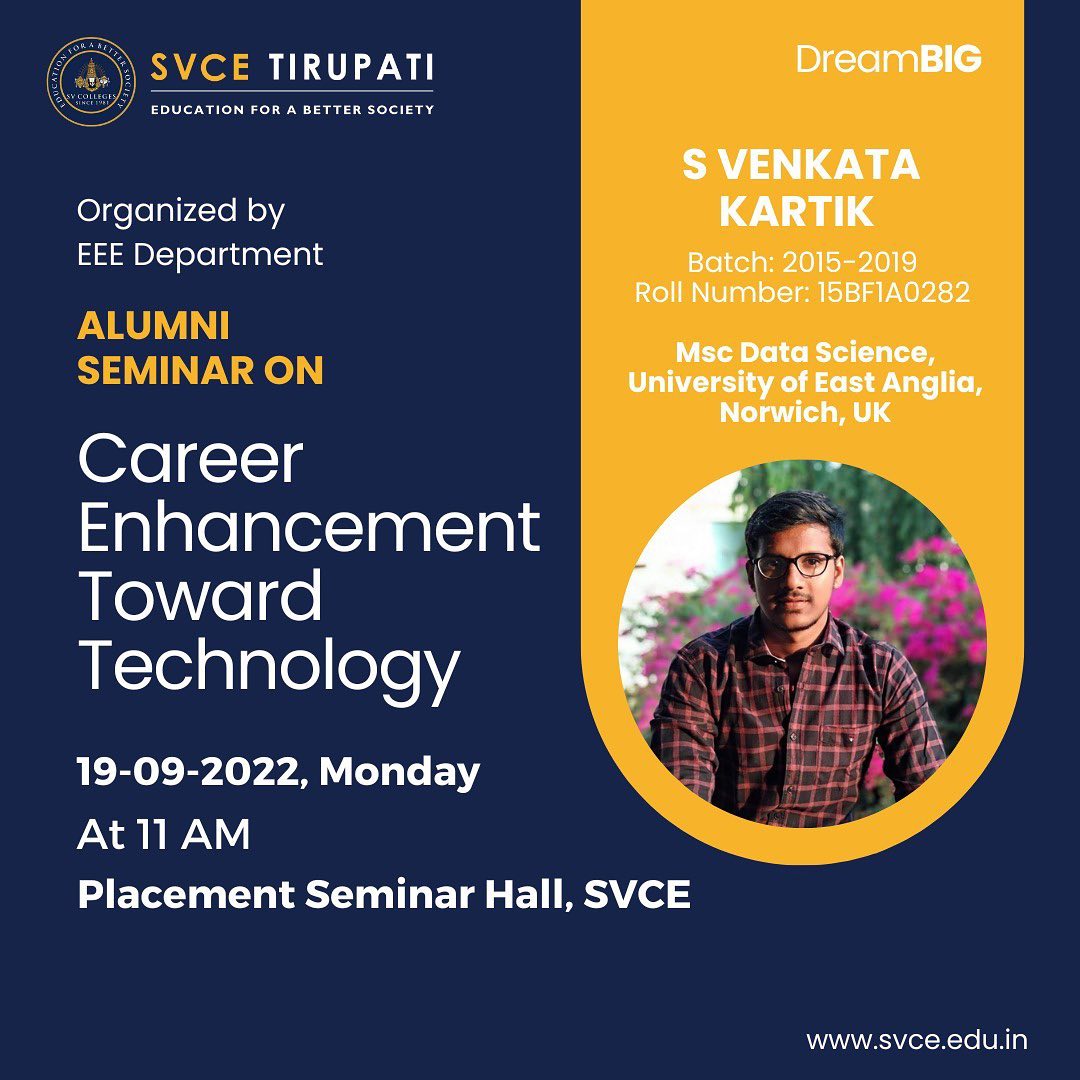
Career Enhancement

CONFERENCE
UPCOMING

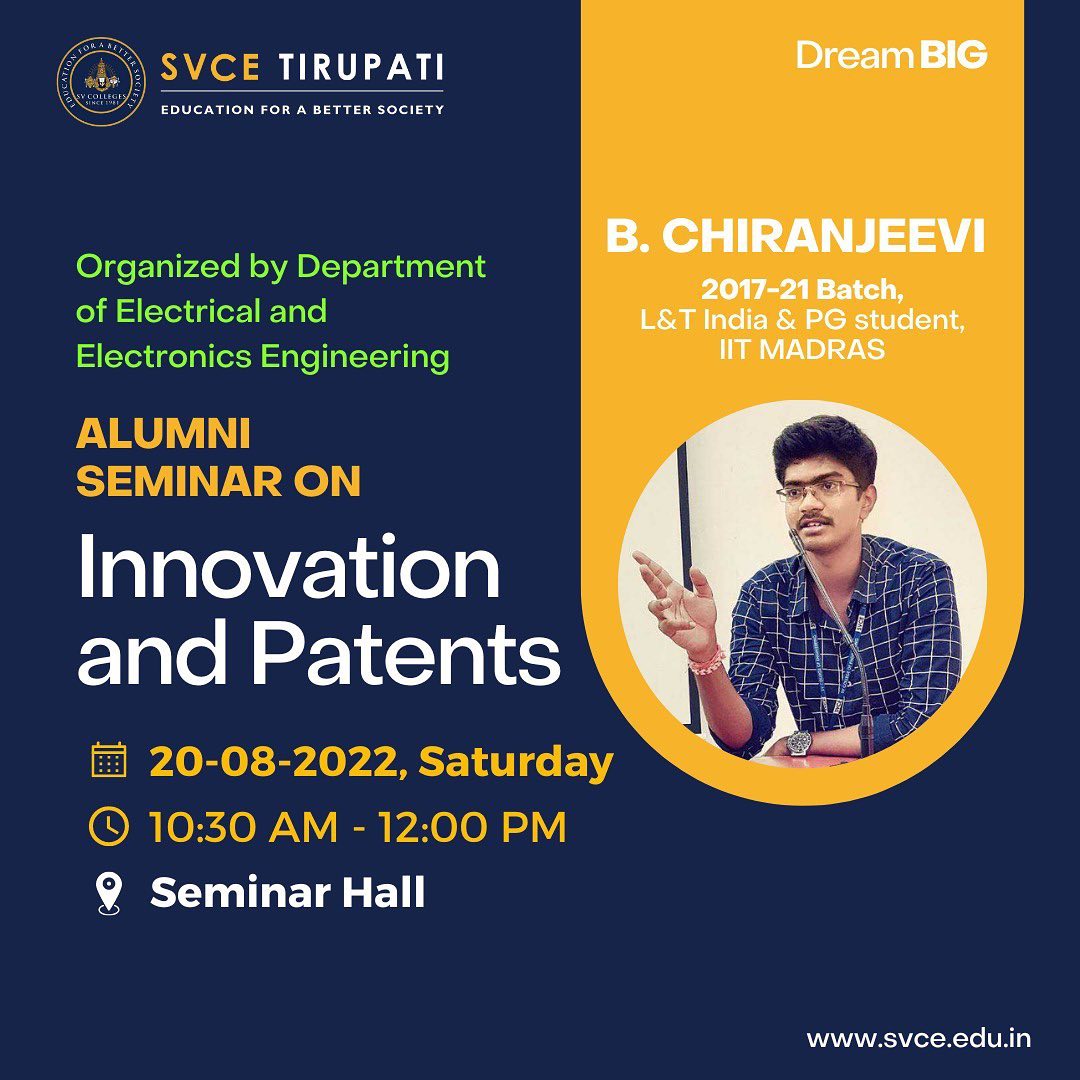
Innovation & Patents

WORKSHOP
UPCOMING

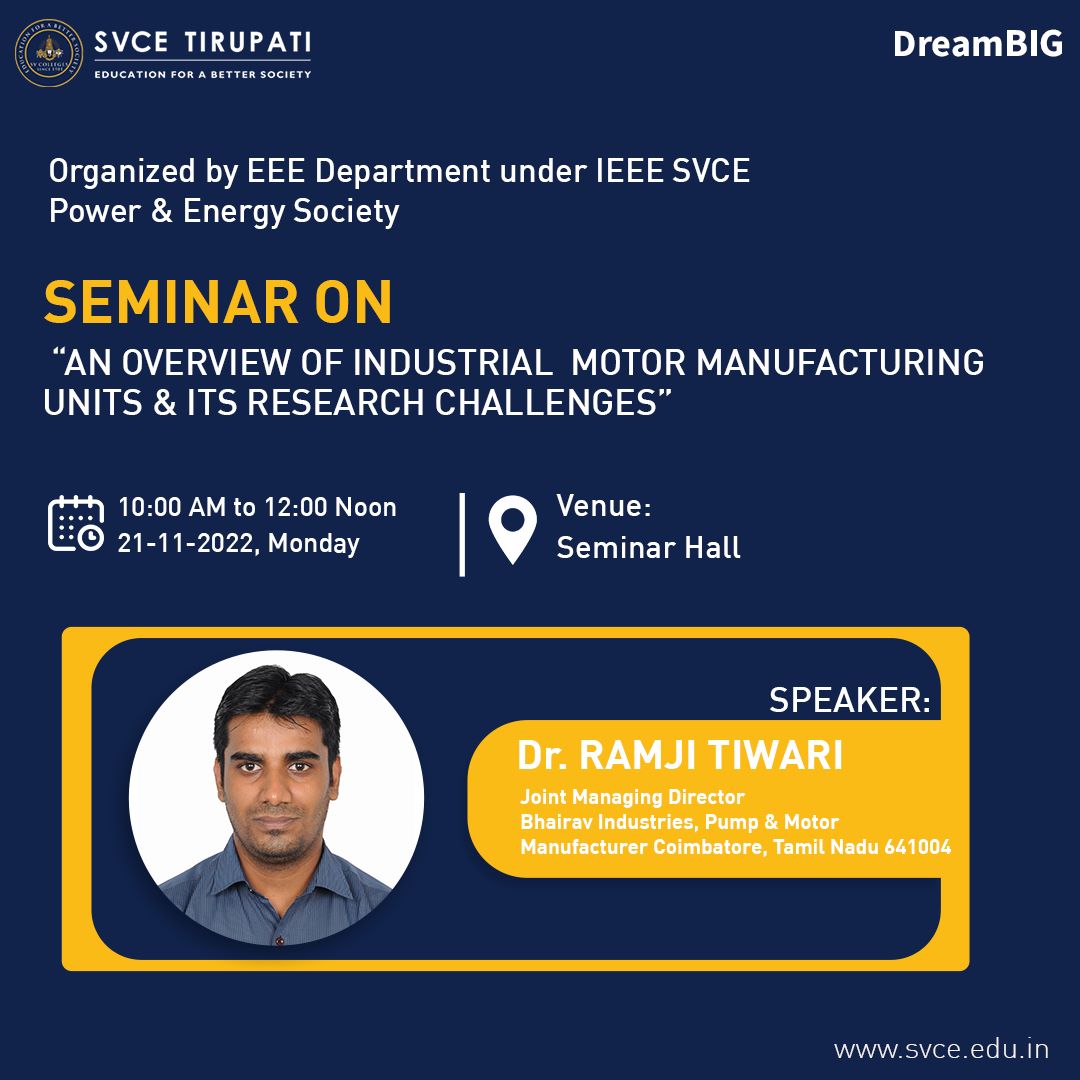
Industrial Motor Manufacturing

TRAINING PROGRAM
UPCOMING

RECRUITERS

S.No Companies Visited Recently
1ACCENTURE
2IBM
3ZOHO
4COREEL
5DELOITTE
6RENAULT NISSAN
7AMARA RAJA ENERGY & MOBILITY LTD
8INDO-MIM
9QSPIDERS
10TCS
11WIPRO
12CAPGEMINI
13ACMEGRADE
14INDIA CEMENTS
15WHIZZARD
16CITY UNION BANK
17SUTHERLAND
18CHEGG

DEPARTMENT DETAILS

S.No Course Structure View
1
Course Structure R23
2
Course Structure R20
3
Course Structure R19
4
Course Structure R15
S.No Faculty View
1
EEE Faculty List
S.No Workshops & seminars View
1
2021-2022
S.No Workshops & seminars View
1
2020-2021
S.No Workshops & seminars View
1
2019-2020
S.No Infrastructure View
1
Infrastructure
S.No Visiting, Adjunct and Emeritus Faculty View
1
Visiting, Adjunct and Emeritus Faculty
S.No Faculy Development Program View
1
2021-2022
S.No Faculty Development Program View
1
2020-2021
S.No Faculty Development Program View
1
2019-2020
S.No Faculty Development Program View
1
2018-2019
S.No News Letters View
1
Jan-Jun
S.No News Letters View
1
Jan-Jun
2
July-Dec
S.No News Letters View
1
Jan-Jun
2
Jul-Dec
S.No Innovations by Faculty in Teaching and Learning View
1
Statement of Clear Goals
2
Interactive Smart Board
3
Project Based Learning
4
Flipped Classrooms
5
Group Discussions
6
Sample Course on Innovative Practices
S.No Magazines View
1
Jan-Jun
S.No Magazines View
1
Jan-Jun
2
July-Dec
S.No Magazines View
1
Jan-Jun
2
Jul-Dec
S.No Magazines View
1
Jan-Jun
2
Jul-Dec
S.No Magazine View
1
Jul-Dec
S.No Placement Reports View
1
2020-2024
S.No Placement Reports View
1
2019-2023
S.No Placement Reports View
1
2018-2022
S.No Placement Reports View
1
2017-2021
S.No Placement Reports View
1
2016-2020
S.No CO-PO Attainment View
1
CO Attainment
2
PO Attainment
S.No Professional Society Bodies View
1
Professional Society Bodies
S.No Faculty Achievements View
1
Faculty Achievements
S.No Student Achievements View
1
Student Achievements
S.No Teaching & Learning View
1
Innovations by the Faculty in Teaching & Learning for Students
S.No Internships View
1
Internships
S.No Roll of Honours View
1
Roll of Honours
S.No MoUs & Industry Supported Laboratories View
1
MoUs & Industry Supported Laboratories
S.No Higher Education View
1
Higher Education
S.No Industrial Visits View
1
Industrial Visits
S.No Research & Development View
1
Journals
2
Conference Publications
3
Books & Book Chapters
4
Patents
5
Sponsered Research
S.No Digital Content View
1
Subject Notes
Scroll to Top