OVERVIEW
The Department of Computer Applications (MCA) was started in the year 2008. In this era of technological explosion, the department is dedicated to maintaining a high standard of excellence through quality, technology and innovation. Master of Computer Applications (MCA) is a two-year professional post-graduate course for candidates wanting to delve deeper into the world of Computer Application development with the help of learning modern programming language. The programme is a blend of both theoretical and practical knowledge. The MCA program seeks to prepare participants for high level careers in the ever expanding field of Computer Applications. It comprises a comprehensive and integrated sequence of courses aiming to develop knowledge and skills in all areas of Computer Applications. The department has well-equipped laboratory and best infrastructural facilities. The department has organized various workshops in collaboration with the industry experts
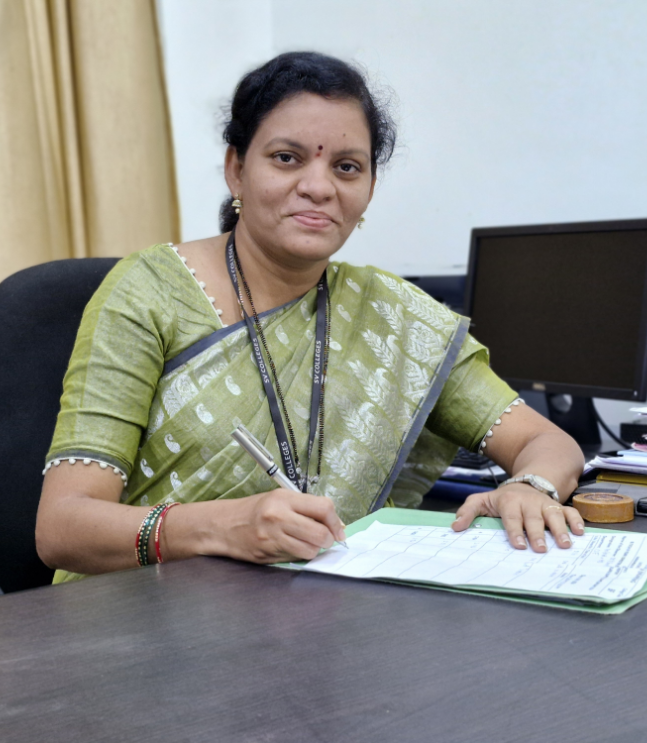
HEAD OF DEPARTMENT

Dr. E. Sreedevi
MCA., Ph.D.

Vision
- To establish Centre of excellence in technical education using the state of the art infrastructure and best of the faculty to produce graduates industry ready.
Mission
- To create professionals with profound knowledge and skill set to the services for the betterment of society.
- To impart quality education using best in faculty with balanced curriculum.
- To develop moral and ethical values.
PROGRAM OUTCOMES
ENGINEERING KNOWLEDGE
Apply the knowledge of mathematics, science, engineering fundamentals, and an engineering specialization to the solution of complex engineering problems.
PROBLEM ANALYSIS
Identify, formulate, review research literature, and analyze complex engineering problems reaching substantiated conclusions using first principles of mathematics, natural sciences, and engineering sciences.
DESIGN/DEVELOPMENT OF SOLUTIONS
Design solutions for complex engineering problems and design system components or processes that meet the specified needs with appropriate consideration for the public health and safety, and the cultural, societal, and environmental considerations.
CONDUCT INVESTIGATIONS OF COMPLEX PROBLEMS
Use research-based knowledge and research methods including design of experiments, analysis and interpretation of data, and synthesis of the information to provide valid conclusions.
MODERN TOOL USAGE
Create, select, and apply appropriate techniques resources, and modern engineering and IT tools including prediction and modeling to complex engineering activities with an understanding of the limitations.
THE ENGINEER AND SOCIETY
Apply reasoning informed by the contextual knowledge to assess societal, health, safety, legal and cultural issues and the consequent responsibilities relevant to the professional engineering practice.
ENVIRONMENT AND SUSTAINABILITY
Understand the impact of the professional engineering solutions in societal and environmental contexts, and demonstrate the knowledge of, and need for sustainable development.
ETHICS
Apply ethical principles and commit to professional ethics and responsibilities and norms of the engineering practice.
INDIVIDUAL AND TEAM WORK
Function effectively as an individual, and as a member or leader in diverse teams, and in multidisciplinary settings.
COMMUNICATION
Communicate effectively on complex engineering activities with the engineering community and with society at large, such as, being able to comprehend and write effective reports and design documentation, make effective presentations, and give and receive clear instructions.
PROJECT MANAGEMENT AND FINANCE
Demonstrate knowledge and understanding of the engineering and management principles and apply these to one’s own work, as a member and leader in a team, to manage projects and in multidisciplinary environments.
LIFE-LONG LEARNING
Recognize the need for, and have the preparation and ability to engage in independent and life-long learning in the broadest context of technological change.
CAREER PATH
Web Developer
CS Specialist
Business Analysis
Automation Engineering
IT Managers
Business Development Executives
Teaching Field
Startups and Innovation Hubs
Technology Consulting and Services
Product Development and Manufacturing
EdTech and E-Learning Platforms
Social Entrepreneurship and Sustainable Solutions
Internet of Things (IoT) and Smart Solutions
Mobile App Development and Digital Services
Robotics and Automation
OUR PROGRAMS
Master of Computer Applications
Master of Computer Applications Department
PG PROGRAM
2 YEARS
PROGRAM DETAILS
INFRASTRUCTURE
1. Spacious Classrooms:
- Well-furnished classrooms with modern teaching aids such as LCD projectors and smartboards to ensure an interactive learning environment.
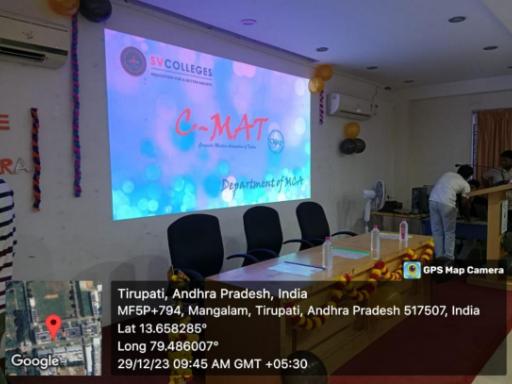
2. Seminar Hall:
- A fully equipped seminar hall with high-quality audio-visual systems, accommodating up to 150 participants for guest lectures, seminars, and conferences.
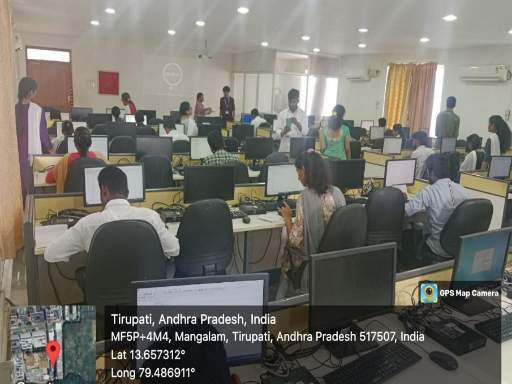
3. Computer Lab:
A dedicated computer lab with high-speed internet, advanced software, and simulation tools catering to data analysis, business modeling, and decision-making exercises.
4. Library and Learning Resource Center:
A rich collection of management books, journals, and e-resources to foster research and learning.
5. Wi-Fi Campus:
High-speed Wi-Fi connectivity across the campus for seamless access to digital learning platforms.
6. Cafeteria and Recreational Facilities:
A modern cafeteria offering hygienic and nutritious food, along with recreational spaces for relaxation and informal discussions.
7. Industry-Institute Collaboration Facilities:
A dedicated placement and training center for organizing workshops, recruitment drives, and corporate engagement programs.
PUBLICATIONS
| SNo | Publication | Year | Department |
|---|---|---|---|
| 1 | Dr. E. Sreedevi, “Plant disease classification using novel integration of deep learning CNN and graph convolutional networks”, Published in Indonesian Journal of Electrical Engineering and Computer Science (IJEECS), ISSN Number: 2502-4752 Published Date: Aug 26, 2024 |
2024 | MCA |
| 2 | Dr. E. Sreedevi, “Implementation and Evaluation of Ensemble Learning Algorithm for Improved Drug Development”, Published in Communications on Applied Nonlinear Analysis. ISSN Number: 1074-133X, Vol 31 No. 6s (2024) Published Date: 06-08-2024 |
2024 | MCA |
| 3 | K. Sreedevi, “Automatic COVID-19 Identification Using Machine Learning Techniques”, Published in Journal of Pharmaceutical Negative Results. DOI: 10.47750/pnr.2022.13.S09.549 |
2022 | MCA |
PATENTS
| SI No | ACY Year | Department | Patent Application Number | Status of Patent | Inventor/s Name | Title of the Patent | Applicant/s Name | Patent Filed Date | Patent Published Date / Granted Date | Patent Publication Number / Granted No. |
|---|---|---|---|---|---|---|---|---|---|---|
| 1 | 2024 | MCA | 202441005418 A | Published | Jajala Kiran Kumar | Revolutionizing Healthcare Operations: Applications, Benefits, and Challenges of Big Data Analytics for Efficient Diagnosis, Cost Reduction, and Personalized Patient Care | SVCE | 26-01-2024 | 09-02-2024 | — |
| 2 | 2024 | MCA | 202441005418 A | Published | Modem Sai Kumar | Revolutionizing Healthcare Operations: Applications, Benefits, and Challenges of Big Data Analytics for Efficient Diagnosis, Cost Reduction, and Personalized Patient Care | SVCE | 26-01-2024 | 09-02-2024 | — |
Computer Lab - 1
Computer Lab - 2
Computer Lab - 3
RECRUITERS
| SNo. | Companies Visited Recently |
|---|---|
| 1 | INTELLIPAAT |
| 2 | CHEGG INDIA |
| 3 | ACCENTURE |
| 4 | QSPIDER |
| 5 | SUTHERLAND |
| 6 | EXCELR |
| 7 | CHEQIN |
| 8 | KODENEST TECHNOLOGIES |
| 9 | TCS |
| 10 | WIPRO |
| 11 | CAPGEMINI |

12
Recruiters

59
Offers

7.6 LPA
Highest Package

3.2 LPA
Average CTC

12
Recruiters

69
Offers

4.5 LPA
Highest Package

2.83 LPA
Average CTC

3
Recruiters

5
Offers

4.5 LPA
Highest Package

3.44 LPA
Average CTC
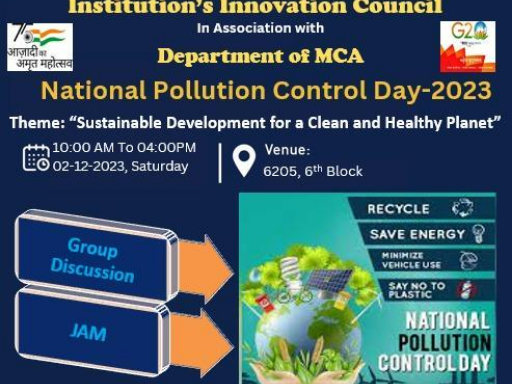
DEPARTMENT EVENTS
Stay in the loop with our dynamic events, including seminars, workshops, and special gatherings. These events are tailored to enhance your academic journey, foster connections with peers and experts, and keep you at the forefront of industry trends. Join us in exploring the exciting world of departmental events and enrich your educational experience.
COURSE STRUCTURE
| Subject Code | Subject Name | Category | Teaching Scheme (Hours) | Credit | Theory Marks | Practical Works | Total Marks | ||||
|---|---|---|---|---|---|---|---|---|---|---|---|
| Theory | Tutorial | Practical | IM | EM | IM | EM | |||||
| CA20FPC101 | Computer Organization | PC | 3 | 0 | 0 | 3 | 40 | 60 | Â | Â | Â |
| CA20FPC102 | Data Structures Using C | PC | 3 | 0 | 0 | 3 | 40 | 60 | Â | Â | 100 |
| CA20FPC103 | Database Management Systems | PC | 3 | 0 | 0 | 3 | 40 | 60 | Â | Â | 100 |
| BA20FHS101 | Accounting and Financial Management | HS | 3 | 0 | 0 | 3 | 40 | 60 | Â | Â | 100 |
| CA20FPC104 | Mathematical Foundations for Computer Science | PC | 3 | 0 | 0 | 3 | 40 | 60 | Â | Â | 100 |
| CA20FPC105 | Computer Networks | PC | 3 | 0 | 0 | 3 | 40 | 60 | Â | Â | 100 |
| Â | Labs | Â | Â | Â | Â | Â | Â | Â | Â | Â | Â |
| CA20FPC106 | Database Management Systems Lab | PC | 0 | 0 | 4 | 2 | Â | Â | 40 | 60 | 100 |
| CA20FPC107 | Data Structures Using C Lab | PC | 0 | 0 | 4 | 2 | Â | Â | 40 | 60 | 100 |
| CA20FPC108 | Office Automation & Trouble shooting Lab | PC | 0 | 0 | 4 | 2 | Â | Â | 40 | 60 | 100 |
| Â | Mandatory Course | Â | Â | Â | Â | Â | Â | Â | Â | Â | Â |
| CA20FMC101 | Corporate Communication Skills | MC | 3 | 0 | 0 | 0 | 40 | Â | Â | Â | 40 |
| Subject Code | Subject Name | Category | Teaching Scheme (Hours) | Credit | Theory Marks | Practical Works | Total Marks | ||||
|---|---|---|---|---|---|---|---|---|---|---|---|
| Theory | Tutorial | Practical | IM | EM | IM | EM | |||||
| CA20FPC201 | Operating Systems | PC | 3 | 0 | 0 | 3 | 40 | 60 | Â | Â | Â |
| CA20FPC202 | Python Programming | PC | 3 | 0 | 0 | 3 | 40 | 60 | Â | Â | 100 |
| CA20FPC203 | OOPS through JAVA | PC | 3 | 0 | 0 | 3 | 40 | 60 | Â | Â | 100 |
| MA20FBS201 | Probability and Statistics | BS | 3 | 0 | 0 | 3 | 40 | 60 | Â | Â | 100 |
| CA20FPC204 | Software Engineering | PC | 3 | 0 | 0 | 3 | 40 | 60 | Â | Â | 100 |
| Â | Elective-I | Â | Â | Â | Â | Â | Â | Â | Â | Â | Â |
| CA20FPC205 | a) Automata Theory | PC | 3 | 0 | 0 | 3 | 40 | 60 | Â | Â | 100 |
| CA20FPC206 | b) Soft Computing | PC | 3 | 0 | 0 | 3 | 40 | 60 | Â | Â | 100 |
| CA20FPC207 | c) Artificial Intelligence | PC | 3 | 0 | 0 | 3 | 40 | 60 | Â | Â | 100 |
| CA20FPC208 | d) Linux Programming | PC | 3 | 0 | 0 | 3 | 40 | 60 | Â | Â | 100 |
| CA20FPC209 | e) Ethical Hacking | PC | 3 | 0 | 0 | 3 | 40 | 60 | Â | Â | 100 |
| Â | Labs | Â | Â | Â | Â | Â | Â | Â | Â | Â | Â |
| CA20FPC210 | Operating Systems Lab | PC | 0 | 0 | 4 | 2 | Â | Â | 40 | 60 | 100 |
| CA20FPC211 | Python Programming Lab | PC | 0 | 0 | 4 | 2 | Â | Â | 40 | 60 | 100 |
| CA20FPC212 | Java Programming Lab | PC | 0 | 0 | 4 | 2 | Â | Â | 40 | 60 | 100 |
| Subject Code | Subject Name | Category | Teaching Scheme (Hours) | Credit | Theory Marks | Practical Works | Total Marks | ||||
|---|---|---|---|---|---|---|---|---|---|---|---|
| Theory | Tutorial | Practical | IM | EM | IM | EM | |||||
| CA20FPC301 | Design and Analysis of Algorithms | PC | 3 | 0 | 0 | 3 | 40 | 60 | Â | Â | 100 |
| CA20FPC302 | Data Science & Analytics | PC | 3 | 0 | 0 | 3 | 40 | 60 | Â | Â | 100 |
| CA20FPC303 | Web Technologies | PC | 3 | 0 | 0 | 3 | 40 | 60 | Â | Â | 100 |
| CA20FPC304 | Cloud Computing | PC | 3 | 0 | 0 | 3 | 40 | 60 | Â | Â | 100 |
| Â | Elective-II | Â | Â | Â | Â | Â | Â | Â | Â | Â | Â |
| CA20FPC305 | a.Software Testing | PC | 3 | 0 | 0 | 3 | 40 | 60 | Â | Â | 100 |
| CA20FPC306 | b.Cryptography and Network Security | PC | 3 | 0 | 0 | 3 | 40 | 60 | Â | Â | 100 |
| CA20FPC307 | c.Internet of Things | PC | 3 | 0 | 0 | 3 | 40 | 60 | Â | Â | 100 |
| CA20FPC308 | d.Software Project Management | PC | 3 | 0 | 0 | 3 | 40 | 60 | Â | Â | 100 |
| CA20FPC309 | e. .NET Framework and c# | PC | 3 | 0 | 0 | 3 | 40 | 60 | Â | Â | 100 |
| Â | Elective-III | Â | Â | Â | Â | Â | Â | Â | Â | Â | Â |
| CA20FPC310 | a.Mobile Application Development | PC | 3 | 0 | 0 | 3 | 40 | 60 | Â | Â | 100 |
| CA20FPC311 | b.Natural Language Processing | PC | 3 | 0 | 0 | 3 | 40 | 60 | Â | Â | 100 |
| CA20FPC312 | c.Big data Analytics | PC | 3 | 0 | 0 | 3 | 40 | 60 | Â | Â | 100 |
| CA20FPC313 | d.Distributed systems | PC | 3 | 0 | 0 | 3 | 40 | 60 | Â | Â | 100 |
| Â | Labs | Â | Â | Â | Â | Â | Â | Â | Â | Â | Â |
| CA20FPC315 | Design and Analysis of Algorithms Lab | PC | 0 | 0 | 4 | 2 | Â | Â | 40 | 60 | 100 |
| CA20FPC316 | Data Science and Analytics Lab | PC | 0 | 0 | 4 | 2 | Â | Â | 40 | 60 | 100 |
| CA20FPC317 | Web Technologies Lab | PC | 0 | 0 | 4 | 2 | Â | Â | 40 | 60 | 100 |
| Â | Mandatory Course | Â | Â | Â | Â | Â | Â | Â | Â | Â | Â |
| CA20FMC301 | Universal Human Values | MC | 3 | 0 | 0 | 0 | 40 | Â | Â | Â | 40 |
| Subject Code | Subject Name | Category | Teaching Scheme (Hours) | Credit | Theory Marks | Practical Works | Total Marks | ||||
|---|---|---|---|---|---|---|---|---|---|---|---|
| Theory | Tutorial | Practical | IM | EM | IM | EM | |||||
| CA20FIP401 | Intership | IP | 0 | 0 | 0 | 2 | Â | Â | Â | Â | Â |
| CA20FTS402 | Seminar | TS | 0 | 0 | 0 | 2 | 50 | Â | Â | Â | 50 |
| CA20PWC03 | Project Work | WC | 0 | 0 | 0 | 16 | Grades:A,B | Grades:A,B | Â | Â | 100 |
DEPARTMENT ACTIVITIES
- Workshops & Seminars
- Faculty Development Program
- Placement Reports
- Digital Content